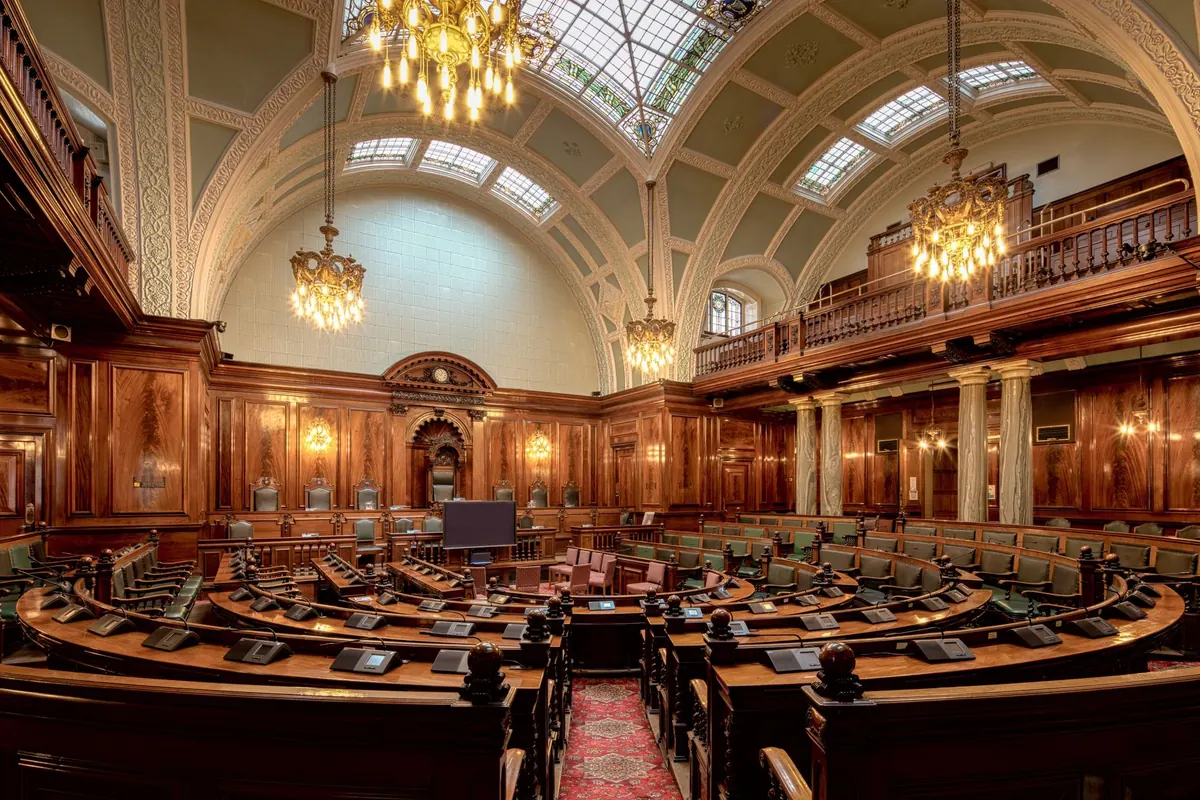
Most of the decisions that shape a Devon neighbourhood are made in rooms with tired lighting, by a show of hands, at 6.30pm on a Tuesday. A dropped kerb. A bus that stops running after 7pm. The council tax figure that lands in your account in April. All of it passes through committees whose agendas are published online in advance — meetings anyone can read up on, attend, and with a little planning, speak at.
The difficulty is knowing which body decides what, when the vote actually lands, and how to get your few minutes at the microphone. Here is how it works across Devon in 2025.
Two tiers, two sets of decisions
Devon runs a two-tier system across most of the county. Devon County Council covers the county area outside Plymouth and Torbay, which are unitary authorities running their own services. Below the county sit the district councils — Exeter, East Devon, Mid Devon, North Devon, South Hams, Teignbridge, Torridge and West Devon — and below them the town and parish councils.
The split decides who you should be emailing.
- County: highways and road maintenance, bus services and school transport, schools, social care, libraries, waste disposal, public health, trading standards.
- District: planning applications, housing and homelessness, waste collection, leisure centres, licensing, environmental health, council tax collection and housing benefit.
- Town and parish: allotments, play areas, some car parks, community halls, and a small precept on your bill.
A single street can involve all three. Parking restrictions are a county matter, the shop conversion next door is a district one, and the play area at the end is the parish's. Getting that wrong costs weeks.
Planning: where your street is decided
Most planning applications never reach a committee. Officers decide them under a published scheme of delegation if they meet local policy and attract no significant objection. The ones that do go to committee are usually the larger or more contested cases, and district planning committees typically meet every few weeks rather than weekly.
If an application near you is listed, two documents matter more than anything else: the officer's report and the recommendation inside it. Members often follow that recommendation, so if you disagree with it, your job is to give them a reason to depart from it that sits inside planning policy — drainage, highway safety, overlooking, design, heritage, flood risk. Not the effect on your house price, and not the developer's character.
Parish and town councils are consulted on applications in their area and their comments go on the file. A well-argued parish objection carries more weight than a hundred identical emails.
The budget vote that sets your April bill
Every principal council must set a balanced budget and agree its council tax for the coming year, and the vote happens at a full council meeting, usually in February or early March. Your bill in April is a stack of precepts: county, district, parish, police and fire.
By the time that February meeting arrives, the numbers are largely settled. The real window is the autumn, when draft budgets and consultation documents go out and scrutiny committees pull them apart. A comment submitted in October through the official consultation has more chance of changing a line than a protest in the public gallery in February. Fees and charges — car parking, leisure, garden waste — are often agreed alongside the budget, and those can hit your household faster than the tax itself.
Transport: highways, buses and traffic orders
Devon County Council is the highway authority. It decides road maintenance priorities, speed limits, parking restrictions and one-way schemes through traffic regulation orders. Those orders go out for formal consultation, and objections can push the final decision up to a committee or to the relevant cabinet member.
Bus services split between commercially run routes and subsidised ones the county pays for. When a subsidised route is reviewed, the consultation usually appears on the county's transport pages rather than on a noticeboard in the village. School transport eligibility is decided here too, and it is one of the most common sources of complaint to councillors.
How to speak at a meeting
The rules differ from council to council, so check the constitution published on the relevant website before you plan anything. The pattern, though, is broadly similar.
- Find the meeting. Committee calendars sit on each council's website, often through a system called Modern.Gov, where agendas, reports, minutes and sometimes webcasts are kept together.
- Register in advance. Most councils want notice, commonly by midday on the working day before the meeting, sometimes several days earlier. Contact details are printed on the agenda. Turning up and asking to speak rarely works.
- Expect a time limit. Three minutes is the usual slot, occasionally five at planning committees, and there is often one speaker for and one against.
- Prepare for no debate. You will not get a back-and-forth with members. Say what you want them to do in your first sentence, then give your reasons.
- Stick to the decision in front of them. At a planning committee that means planning matters only. At a budget meeting it means the line item, not the entire settlement.
- Petitions. Thresholds vary, but most councils will debate a petition that clears a set number of signatures. Ask Democratic Services what the figure is for yours.
If what you are raising could turn into a formal dispute — a planning enforcement case, a boundary or rights-of-way question, anything carrying real financial or legal risk — get advice from a planning consultant or solicitor alongside making your case to the council.
A habit worth keeping
You do not need to attend everything. Pick the one committee that handles most of what matters where you live, usually the district planning committee or the county cabinet, and subscribe to its agenda notifications. Ten minutes on a Sunday evening skimming the reports will tell you more than a year of second-hand rumours.
Then get to know your ward councillors. They vote, they can ask questions on your behalf, they hold surgeries, and they usually know which officer to ring. One email to a councillor before a meeting is often worth more than an hour in the public gallery afterwards.
Dates and speaking rules change, so confirm the details with the council's Democratic Services team before you rely on them. It takes one phone call, and it stops you turning up on the wrong night.
Photo: Michael D Beckwith / Pexels